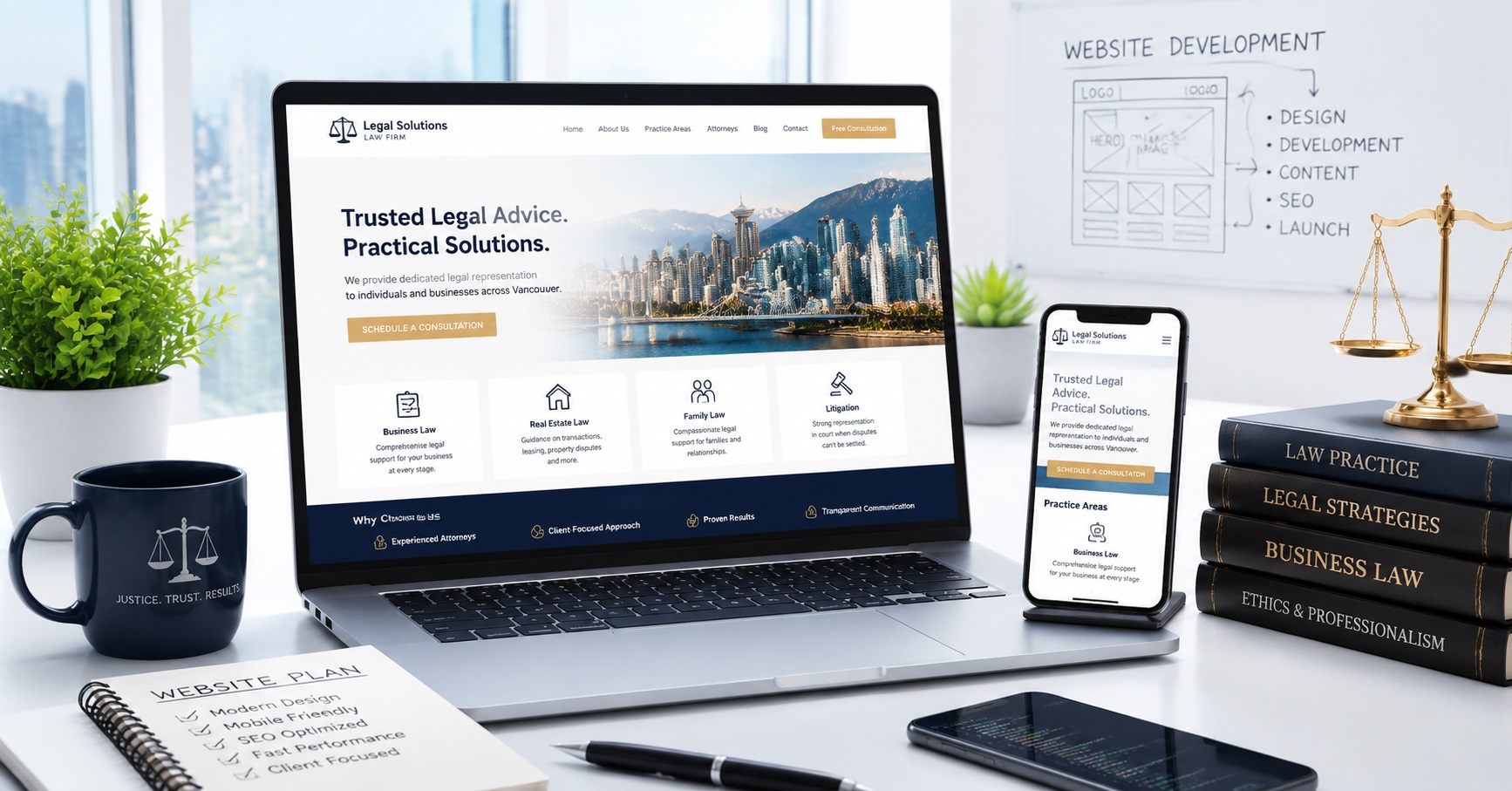
In the digital era, potential clients search for legal help online before they ever pick up the phone. If your practice lacks a strong web presence, you are leaving consultations on the table. Professional website development for law firms in Vancouver is no longer optional — it is a core part of how modern legal practices grow, build trust, and stay competitive in a crowded market. Whether you are a solo practitioner or a multi-attorney firm, this guide walks you through everything you need to know to build a site that works as hard as you do.
Table of Contents
- Why Vancouver Law Firms Need a Purpose-Built Website?
- Key Features Every Law Firm Website Must Include
- How Law Firm Websites Drive Growth in Vancouver?
- Choosing the Right Legal Web Design Agency in Vancouver
- Common Mistakes Vancouver Law Firms Make With Their Websites
- Frequently Asked Questions
- How long does it take to build a law firm website in Vancouver?
- Do I need a separate website for each practice area?
- What should I budget for professional law firm website design in Vancouver?
- Can I use a DIY website builder instead of hiring a professional?
- How often should a law firm update its website?
- Frequently Asked Questions
Why Vancouver Law Firms Need a Purpose-Built Website?
Vancouver’s legal market is one of the most competitive in Canada, with thousands of firms and independent attorneys vying for the same clients. A generic or outdated website signals a lack of professionalism before a potential client even reads your credentials. Custom law firm website design in Vancouver ensures your online presence reflects the calibre of service you deliver. A purpose-built legal website does far more than display contact information. It positions your firm as a credible authority, educates visitors on your practice areas, and guides them toward booking a consultation. When done correctly, your website becomes your most reliable business development tool — working around the clock, even when your office is closed.
Key Features Every Law Firm Website Must Include
Clear Practice Area Pages
Prospective clients need to immediately understand whether your firm handles their specific legal issue. Dedicated pages for each practice area — whether family law, corporate litigation, immigration, or personal injury — help both visitors and search engines identify your expertise. Law firm website designers recommend keeping these pages focused, clear, and written in plain language that non-lawyers can understand.
Mobile-Friendly and Fast-Loading Design
More than half of all web searches in Canada happen on mobile devices. If your site is slow or difficult to navigate on a smartphone, visitors will leave within seconds. Website design for attorneys must prioritise responsive layouts, fast load times, and touch-friendly navigation to ensure a seamless experience across all devices.
Trust Signals and Social Proof
Before hiring a lawyer, Canadians want reassurance. Client testimonials, case results, years of experience, bar association memberships, and media appearances all serve as powerful trust signals. A skilled legal web design agency will strategically incorporate these elements throughout your site to build credibility and reduce hesitation.
Secure Client Contact and Intake Forms
A well-designed contact page with a secure intake form makes it easy for prospective clients to take the first step. Adding a confidential inquiry form reassures visitors that their sensitive information is protected — a critical concern in the legal industry. This feature alone can significantly increase your lead conversion rate.
How Law Firm Websites Drive Growth in Vancouver?
Improving Local Search Visibility
Ranking on Google for searches like “family lawyer in Vancouver” or “immigration attorney near me” depends heavily on how your website is built. Effective website development for law firms in Vancouver incorporates local SEO practices from the ground up — including proper heading structure, location-based content, schema markup, and optimised page titles. This makes it easier for potential clients in your area to find you at the exact moment they need legal help.
Building Authority Through Content
A regularly updated blog or resources section positions your firm as a go-to authority in your practice areas. When Vancouver residents search for answers to legal questions — about tenancy disputes, employment rights, or divorce proceedings — your content has the opportunity to appear at the top of those results. The best web development company for law firms will help you create a content strategy that serves both your SEO goals and your clients’ informational needs.
Streamlining Client Communication
Modern law firm websites integrate tools like live chat, appointment scheduling, and client portals to reduce friction in the client journey. These features not only improve the user experience but also free up your staff from routine enquiries, allowing them to focus on higher-value tasks.
Choosing the Right Legal Web Design Agency in Vancouver
Not every web design company understands the unique demands of the legal industry. When evaluating a legal web design agency, look for a team with demonstrated experience building sites for law firms, a clear understanding of bar advertising guidelines, and a proven track record of improving search rankings for legal clients. Ask to see examples of law firm website designs that the agency has delivered. Review how those sites perform on mobile, how quickly they load, and how clearly they communicate the firm’s services. A transparent custom website design agency will walk you through their process, explain their SEO approach, and provide ongoing support after launch.
Common Mistakes Vancouver Law Firms Make With Their Websites
Many firms make the mistake of using generic legal templates that look identical to dozens of competitors. Others neglect to update their sites for months or years, allowing outdated content to erode trust. Some attorneys try to handle web design themselves, spending valuable billable hours on a task better left to specialists. The most costly error, however, is ignoring SEO entirely. A beautifully designed site that does not rank in search results will generate very little organic traffic. Partnering with experienced law firm website designers ensures your site is both visually compelling and technically optimised for Google from day one.
Frequently Asked Questions
How long does it take to build a law firm website in Vancouver?
The timeline varies depending on the size and complexity of the project. A professional custom build typically takes between four and ten weeks, covering discovery, design, development, content integration, and testing. Firms with clear content and branding direction often move through the process more quickly.
Do I need a separate website for each practice area?
No — in most cases, a single well-structured website with dedicated pages for each practice area is sufficient and more effective than multiple separate sites. It consolidates your domain authority and makes it easier for search engines to understand the full scope of your services.
What should I budget for professional law firm website design in Vancouver?
Investment levels vary widely based on scope. A custom, SEO-optimised law firm website with multiple practice area pages, a blog, intake forms, and ongoing maintenance typically ranges from a few thousand to tens of thousands of Canadian dollars. The return on investment, measured in new client consultations, typically justifies the cost within the first year.
Can I use a DIY website builder instead of hiring a professional?
DIY platforms can work for basic informational sites, but they often fall short when it comes to custom law firm website design, advanced SEO, compliance with privacy requirements, and the level of performance that competitive legal markets in Vancouver demand. For firms serious about growth, professional development is the wiser long-term investment.
How often should a law firm update its website?
At a minimum, your website should be reviewed and refreshed every six to twelve months to ensure content accuracy, compliance with any changes in bar guidelines, and alignment with current SEO best practices. Adding new blog posts or resource articles regularly keeps your site active and signals relevance to search engines.